
His newest Substack episode, posted October 12, argues that peace may come from taking the world in rather than holding it off. I think it is the sharpest thing he has published yet.
Sunset Recordings · News
Joe Atman’s Verity Collective Asks Whether Anxiety Is a Problem of Control or of Existence
His newest Substack episode, posted October 12, argues that peace may come from taking the world in rather than holding it off. I think it is the sharpest thing he has published yet.
Most advice about anxiety tells you to take back control. Make a list, build a routine, tighten the screws on your day. Joe Atman’s latest episode of The Verity Collective quietly proposes the opposite, and I have not stopped turning it over since it landed in my inbox. Titled Existential Anxiety: The Fear of Losing Control and Finding Peace, it went up today, October 12, and it asks a question that most self-help shelves are structurally unable to ask: what if the thing making us miserable is the demand for control itself?
I run a record label, which means I spend a good part of my life around people who are certain they can manage outcomes that nobody can manage. Radio spins, playlist placements, the mood of a crowd on a Thursday night. So the idea that peace might arrive through a different relationship with the uncontrollable, instead of through winning the fight with it, lands with me harder than it might with a reader who has never had a release date slip. I will tell you now that I am an admirer of this writer and a supporter of his work, and I will try to earn that admiration on the page rather than assert it.
What The Verity Collective Is
The Verity Collective is the Substack home of Joe Atman, a philosopher, author, and the founder and CEO of Middle Tree, an educational nonprofit. Its running subtitle, The Philosophy of Joe, tells you the ambition in plain language: it is a place for him to write about the deep questions of humanity. The publication launched roughly ten months ago, which in newsletter years means it is still finding its readers, and it has the confidence of something written by a person who is not waiting for permission.
That confidence comes from the résumé behind it. Atman earned his bachelor’s and master’s degrees at Hofstra University in writing and philosophy, spent close to a decade in its New College program, went on to a PhD fellowship in the philosophy of religion and theology at Claremont Graduate University, and later completed a doctorate in sacred theology at Saint Mary’s Seminary. He sits on the board of the Center for Process Studies, has written two books that can be downloaded for free, and runs Middle Tree, the Claremont, California nonprofit that offers affordable tutoring, counseling, and small classes with unlimited working time. A person with that range does not write a newsletter to chase clicks. He writes one because there are questions he wants to think through in public.
Innerness, Otherness, and the Anxiety Between Them
The new episode, which arrives with a video titled theheartoftheexistentialcrisis, begins with the existential crisis and our relationship with the external world, or what Atman calls otherness. The conversation examines how anxiety can emerge when the outside world seems to push into our inner experience and challenge our sense of control. If you have ever felt your private calm dissolve because of a headline, a diagnosis, a bill, or a stranger’s mood, you already understand the territory, even if you never had a word for it.
To map it, Atman works with two paired ideas: innerness and otherness, and subjectivity and objectivity. The tension between them is the engine of the whole discussion. We experience ourselves as an inside and the world as an outside, and anxiety, in his telling, is what happens when the boundary between the two stops feeling secure. The proposal at the center of the episode is that peace may come not from resisting the external world but from incorporating it into our understanding of ourselves.
I find that framing more honest than the usual fortress model of the self. We tend to picture a mind as a house with locks, and anxiety as evidence that someone is jiggling the handle. Atman suggests the house was never sealed in the first place, and that the real work is learning to live in a place with open windows. That is a harder message to sell and a more truthful one.
Peace may not come from resisting the world. It may come from letting the world become part of who you are.Don Lichterman, on The Verity Collective
The Digestive Metaphor
The most memorable device in the episode is a digestive metaphor. Atman describes how we take in experience, process it, and return it to the world, the way a body takes in food, extracts what it can, and gives the rest back. It is an earthy image, deliberately unglamorous, and it works precisely because nobody finds digestion mystical. We do not agonize over whether eating compromises the self. We simply do it, every day, as a basic exchange with the world.
The trouble, according to the episode, is that this cycle can generate existential angst when we treat the exchange as a threat. If every experience coming in feels like an invasion, and every output going back feels like a loss, the cycle that should sustain us becomes a source of dread. I read the metaphor as an invitation to ask whether our suffering lives in the experiences themselves or in the way we resist processing them. It is a small image carrying a surprising amount of weight.
Control as an Adolescent Appetite
The episode also draws a line between an adolescent desire for control and a more mature way of existing, one that accepts uncertainty while continuing to grow. I think this is the passage readers will quote. Adolescence, here, is not an age but a posture: the belief that enough effort will make the world hold still. Maturity is not resignation, and the episode takes care to say so, since the mature stance still involves growth. What changes is the terms. You stop demanding that life be predictable and start becoming the kind of person who can meet the unpredictable without breaking.
The question at the heart of the episode
What if overcoming existential anxiety is not about controlling the world, but about changing the way we exist within it?
Where This Sits in the Larger Conversation
None of this appears out of nowhere. The Danish philosopher Soren Kierkegaard wrote about anxiety as early as 1844, in a book that ties it to freedom and possibility rather than to any specific threat, and the existentialist tradition that followed made the unsettled self one of its central subjects. What strikes me about Atman’s approach is the direction he takes it. Instead of treating anxiety as proof that the world is hostile, he treats it as a clue that our model of ourselves, as sealed units standing apart from everything else, may be wrong.
It is also worth noting where he does his other work. Atman serves on the board of the Center for Process Studies, an institution devoted to process philosophy, a school of thought that understands reality as relationships and events in motion rather than as fixed, separate things. I am not putting words in his mouth by claiming a straight line from that tradition to this episode, and I would not presume to. But a thinker comfortable with relational views of reality has an obvious head start on the claim that self and world are not walled apart. Readers who like seeing ideas connect across a writer’s work will enjoy tracing it.
The practical conclusion, for me, is modest and useful. If the goal is to feel less afraid of losing control, the episode suggests asking a different question than how to prevent loss. It asks what kind of relationship with the world would make loss survivable. That is a better question for a Monday morning than anything I have found in a productivity book.
Why It Belongs on Our Radar
Sunset Recordings has always argued that artistry is bigger than any single format, and Atman is a good example of why. The man who writes this newsletter also runs a nonprofit that tells students they can take all the time they need, and, as it happens, sings on a record. His thinking has a throughline, which is that people deserve room, whether that is room to learn, room to be uncertain, or room to exist without having everything solved. Following his Substack is the clearest way to watch that thinking develop in real time.
One More Thing: The Music
Since this is a music label’s website, I should mention that Atman also makes records. His CD, It Took The Village, is credited throughout to Joe Atman with the Riohc Choir, and its closing stretch is a five part suite called Story of The Lama, with chapters titled for ideas like dharma and wu wei. If the Substack episode speaks to you, the album is a natural next listen. Here is “Moon-Sabled Nights” to start, and you can stream Sunset releases through the Sunset App.
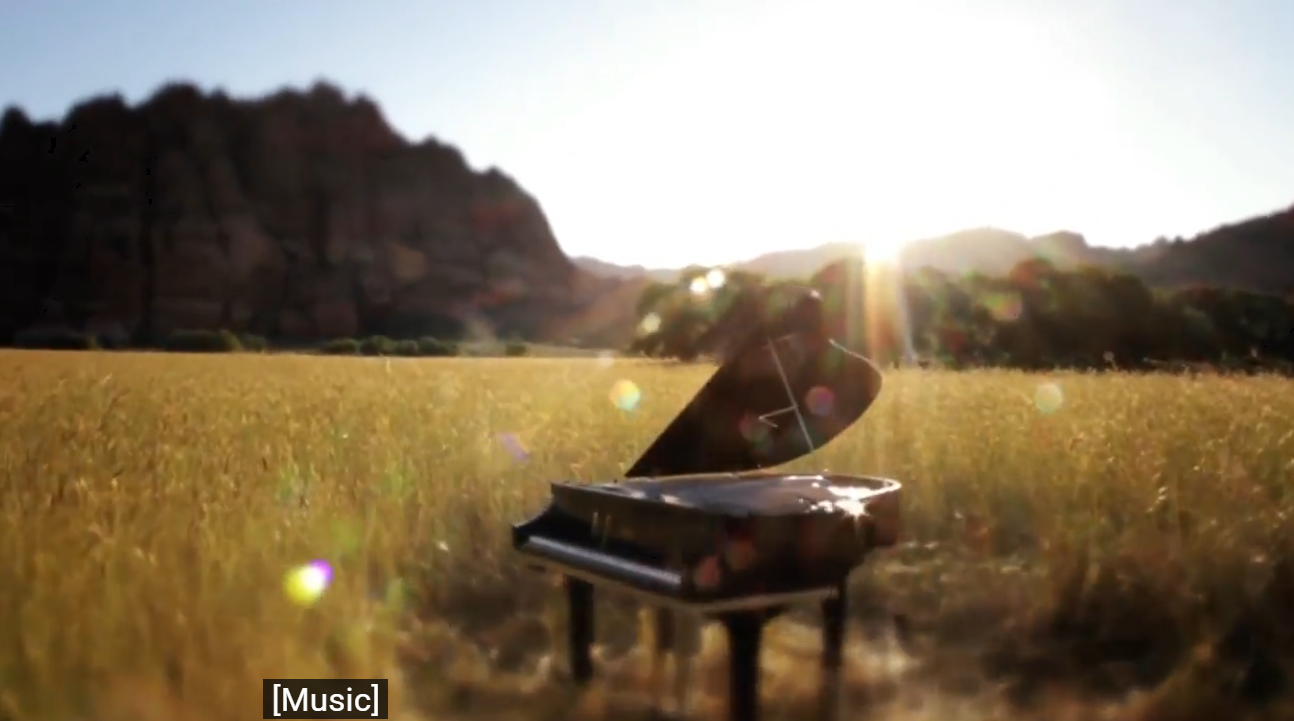
Joe Atman with the Riohc Choir performing “Moon-Sabled Nights”
It Took The Village
Joe Atman with the Riohc Choir · 15 tracks
- Arrest Me
- Another Day
- Johnny-Johnny Red Bird
- Know The Wind
- Refined Way
- Moon-Sabled Nights
- Walls
- Consoned
- Cats
- Sunshine When It Rains
- Story of The Lama I: Lama
- Story of The Lama II: Smithorines
- Story of The Lama III: Dharma
- Story of The Lama IV: Wu Wei
- Story of The Lama V: Outro