
Sunset Recordings · News
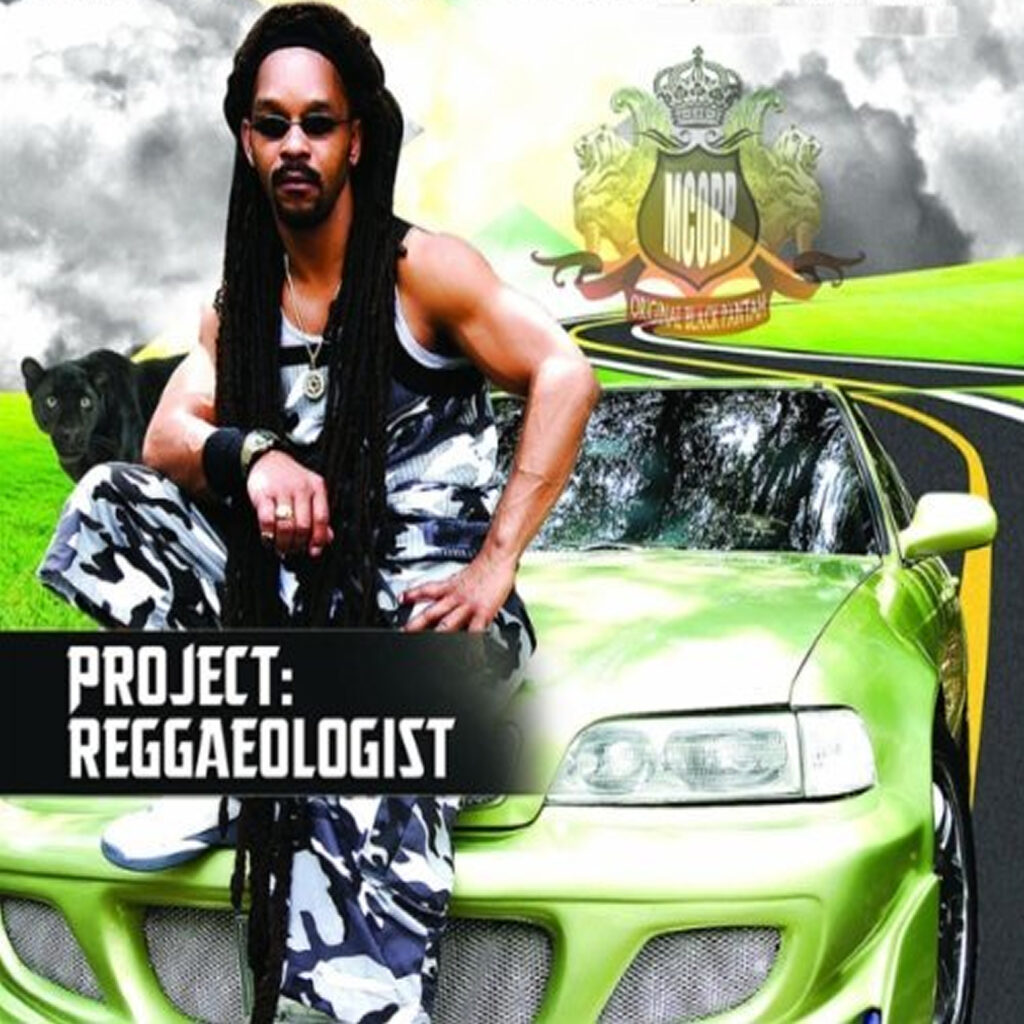
Original Black Pantah Turns Dancehall Into Doctrine on Project Reggaeologist
A Kingston-born, Brooklyn-shaped artist collapses roots reggae and raw dancehall into one record, and I think it’s the most complete statement Sunset Recordings has put its name behind.
Every so often a record lands on my desk that refuses to sit still, and Project Reggaeologist by Original Black Pantah is exactly that kind of record. It does not wait politely for you to catch up. It grabs the room, welds roots reggae to raw dancehall, and plants itself somewhere between a sermon and a street corner cypher. I have run Sunset Recordings long enough to know the difference between an artist who performs a genre and one who has actually lived inside it, and Judea Hosang, the man who records as Original Black Pantah and calls himself MC O.B.P. on the mic, falls firmly into the second category. He has been inside this music since before most of us were old enough to choose our own playlists, and Project Reggaeologist sounds like thirty years of listening finally getting a chance to speak.
I want to be upfront about something. I am not neutral here. Sunset Recordings put this album out, and I have watched Pantah build it track by track, so take my enthusiasm for what it is: the opinion of someone who believes in the work. But belief has to be earned, and this record earns it by refusing the easy path. Plenty of reggae acts settle into one lane, either the conscious, Rasta-rooted sermonizing or the harder dancehall snarl, and rarely do the two meet without one swallowing the other. Pantah does not choose a side. He runs both lanes at once and somehow keeps the car on the road.
From a Kingston Church Pew to a Brooklyn Stage
To understand why the record moves the way it does, you have to go back to where Pantah actually started, which was not a studio at all but a church in Kingston, Jamaica. By seven years old he was already singing in front of a congregation, which is an early age to learn that a voice can hold a room, and it shaped how he still delivers a line today, with the weight of someone who learned to sing before he learned to perform. At thirteen his family relocated to Brooklyn, and that move mattered. Kingston gave him the roots. Brooklyn gave him the edge.
In Brooklyn he did what a lot of serious young musicians do, he enrolled in a local music school and stopped treating music as a hobby. He studied vocal training alongside African d’jimbe drumming and string instruments, a combination that tells you a lot about how his ear developed, rhythmic first, melodic second. By fourteen he was working as a backup vocalist and percussionist in his first reggae band, then picked up trap drums on top of it. Most fourteen year olds are still figuring out what kind of music they like. Pantah was already inside three or four different instrumental traditions at once, which is precisely the kind of foundation that lets an artist blend genres later without it sounding like a gimmick.
He is not another voice riding a riddim. He built the riddim’s vocabulary from the ground up, one instrument at a time.Don Lichterman, Sunset Recordings
The next chapter came through the Air Force, where at nineteen he and his band, called 360, released three singles and effectively launched his recording career. From there the opportunities got bigger fast. He opened for The Skatalites, Shabba Ranks, Tony Rebel, and King Sunny Ade, a lineup that spans ska’s founding generation, dancehall’s biggest commercial explosion, and West African highlife royalty. You do not get booked in front of audiences that particular without already having range, and that range is the entire premise of Project Reggaeologist.
Inside Project Reggaeologist
The album opens with intent rather than a slow build. “B.I.B.L.E.” and “My Stage Name Is MC. O.B.P.” arrive early and do the work of a mission statement, positioning Pantah as what I’d call a microphone prophet, someone treating the booth like a pulpit and a corner store at the same time. From there the record keeps its social conscience close to the surface. “Mama Did Say” is a tribute to maternal strength, the kind of song that lands harder if you grew up with a mother who held a household together on will alone. “We Need Love” is a plea for unity dressed up as a song you can still dance to, which is a harder trick than it sounds, and “Nuh Gamble With My Love” carries a roots-reggae warning about heartbreak that feels lived rather than written.
Then the record turns militant. “I’m a Buffalo Soldier” channels rebel spirit directly, and its reggaeton remix, featuring Zecario and El Rubio, gives the track a Latin fire that widens its audience without diluting the message, a smart move for an artist trying to reach beyond one region’s radio dial. “Hackle Me” and “I Feel Raw” show Pantah at his most commanding, all delivery and no filler, while “Hey Blacks” and its remix function as a cultural wake-up call dressed in a hook catchy enough to spread on its own. “Hey My Lady” softens everything into a serenade before the album closes on “What Dem Do,” featuring the Real VA Rude Boy, a rugged dancehall track aimed squarely at the people Pantah considers oppressors.
What holds all of that together, the tenderness of “Mama Did Say” next to the aggression of “What Dem Do,” is Pantah’s refusal to pick a single emotional register and stay there. Reggae at its best has always done both things, comfort and confrontation, in the same breath, and this album understands that history rather than just referencing it.
A Screen Presence to Match the Voice
Pantah’s résumé is not limited to a microphone. He has cameo credits in two films that, on paper, could not be more different from each other but both matter to the culture he draws from. The first is Drop Zone, the 1994 Paramount action thriller directed by John Badham, the same director behind Saturday Night Fever and WarGames. Wesley Snipes stars as U.S. Marshal Pete Nessip, chasing down a gang responsible for a mid-air prison break, with Gary Busey playing the mastermind behind a planned Independence Day heist and Yancy Butler as the skydiver who trains Nessip to finish the job. It is a big, loud, stunt-driven studio picture, and Pantah’s presence in it says something about how far his reach extended even outside music.
The second film sits on the opposite end of the spectrum. Shottas, released in 2002 and directed by Cess Silvera, is a gritty Jamaican-American crime drama that follows Biggs and Wayne, played by Ky-Mani Marley and Spragga Benz, from the streets of Kingston to the underworld of Miami. It is a film built on the idea that crime is manufactured by circumstance as much as by choice, and its soundtrack, shaped by Stephen Marley, mixes reggae and hip-hop in a way that mirrors the story’s dual geography. Shottas has become a genuine cult classic, especially among audiences with real ties to Jamaican culture, and Pantah’s appearance in it places him inside a project that still gets passed around and quoted years after release. Both films are available to stream on the Sunset App, if you want the full picture of where Pantah has shown up on screen.
Radio, Awards, and the Rooms That Matter
Project Reggaeologist is not just an artistic statement, it is already earning real airplay, including rotation on 91.5FM WPRK at Rollins College and 99 Jamz WEDR FM in Miami, two stations with genuinely different audiences that both found room for the record. Pantah has also put in the kind of stage time that builds an artist’s reputation the slow, correct way, including a performance at the Jackie Gleason Theater, a win at the WEDR 99 Jamz talent search, and a Best Reggae Song award at the Bayside Amphitheater on a bill that included Buju Banton, Capleton, and Movado, which is not a lineup you share space with by accident. His set at the Tampa Bay Collard Green Festival added another live credit to a résumé that already reads like an artist who has paid every one of his dues in public.
I say all of this not to pad a bio but because it matters for how you should hear the record. Project Reggaeologist did not arrive from a bedroom studio with no context behind it. It arrived from a church pew in Kingston, a music school in Brooklyn, an Air Force band, a string of opening slots for genre royalty, two film sets, and a stretch of festival and theater stages. Every one of those rooms taught Pantah something about how to hold an audience, and you can hear all of it stacked into this album.
Why Sunset Recordings Believes in This Record
Sunset Recordings exists to back artists who are building something real rather than chasing a trend, and Original Black Pantah is precisely the kind of artist development we care about. He is not a reggae purist performing nostalgia, and he is not a dancehall opportunist chasing a viral hook. He is a reggaeologist, a term he has essentially earned the right to use, someone who studies the culture from the inside and then reports back in a voice that is unmistakably his own. Whether you come to this record as a roots reggae loyalist, a dancehall diehard, or someone who just wants bass that moves your body while a lyric moves your head, Project Reggaeologist has a place for you to land.
Project Reggaeologist is available now on CD and across digital platforms. Watch for more from Original Black Pantah as he keeps building on a career that has already spanned three decades, two continents, and more stages than most artists see in a lifetime.